Chapter 1 · pages 3 to 8 of the manuscript
The time before 1933
„Alle Fakten, Orte und Umstände, die ich hier beschreibe, stammen entweder aus meinem Gedächtnis oder aus Erzählungen von anderen.“ (All the facts, places and circumstances that I describe here come either from my memory or from the accounts of others.) With this sentence the author opens his first chapter — and tells how his parents found their way to each other.
- Father
- Adam Aleksander Bohmert, born on 9 April 1912 in Wola Brwileńska near Płock
- Mother
- Władysława Szczepkowska, born on 14 October 1909 in Zeńbok near Ciechanów
- Marriage
- 10 April 1937 in Siemiątkowo Koziebrodzkie
- Children
- Bohdan, born 26 October 1933 in Warschau (Warszawa); Halina, born 29 January 1937 in Łaszewo
- Residences
- Warschau (Warszawa) until 1936, afterwards Działdowo, Pocztowa-Straße no. 4
- Images
- image no. 1 to 9 of the manuscript
The parents
A bookbinder from Wola Brwileńska, a daughter from Zeńbok
Both parents come from small places in the north of Masovia, both born about three years apart. They met in Działdowo — the place where, in 1912, the mother's grandmother had also married a new man.
Father Adam Aleksander Bohmert came to Działdowo to attend the teachers' seminary and rented a room with the Fijałkowski family. Władysława Szczepkowska also lived there, the daughter of the house from the first marriage of Grandmother Sabina. The author notes that „natürlich die schöne Własdysława aufgefallen war“ (of course the beautiful Władysława had caught his eye) — and that Adam decided at once that she must become his wife.
Władysława wanted nothing to do with it. She did not appear at the meeting he had finally obtained after many efforts; Adam waited for hours at the agreed place. Later, during a longer stay in Warschau (Warszawa), a telegram reached her which he had signed with someone else's name, only to bring her back.
The author closes this section with a confession: „Wie er es schließlich geschafft hat, ihr Herz zu gewinnen, ist mir bis heute ein Rätsel. Ich habe meine Mutter niemals danach gefragt.“ (How he finally managed to win her heart is a riddle to me to this day. I never asked my mother about it.)
- Adam Aleksander
- born on 9.4.1912 in Wola Brwileńska near Płock
- Władysława
- born on 14.10.1909 in Zeńbok near Ciechanów
- The mother's parents
- Sabina Szczepkowska and Stanisław Fijałkowski, married around 1912, resident in Działdowo
- Denomination
- the father's mother was Protestant, the mother Catholic
- Marriage
- on 10.4.1937, only after the birth of the second child
„Komm nach Hause, Mutter schwer krank“
Telegram from Adam to Władysława, signed with the name of Aunt Jula — only to be able to see her
Come home, mother seriously ill.
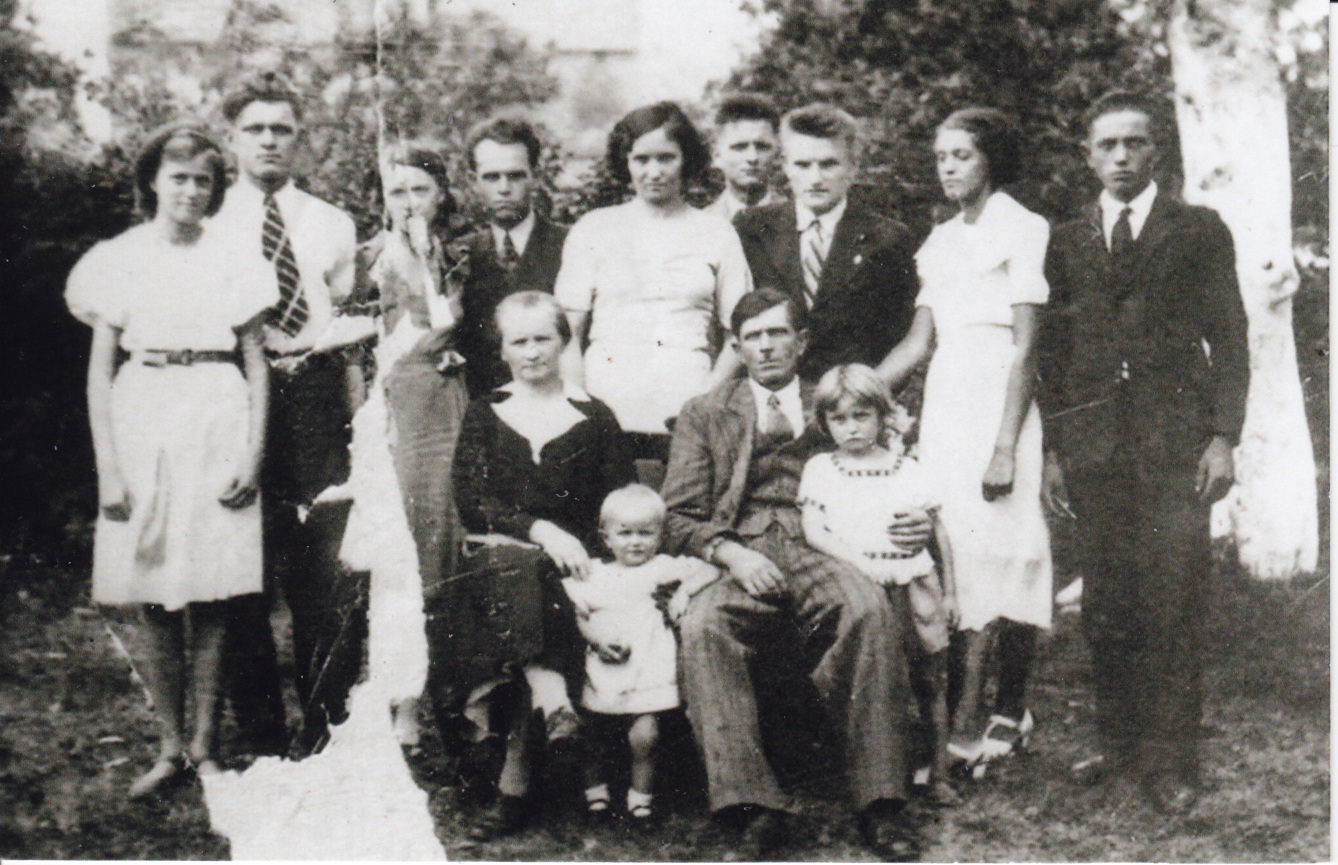
Image no. 2
Thirteen names in one photograph
The list names the mother twice: once as Władysława among the siblings, once as the stepfather Stanisław, who comes from the grandmother's second marriage. Two children are also in the picture — Halina and the author himself, both in white.
In a comment of his own the author notes that this photograph is younger than the number of persons depicted suggests: „Das Foto wurde gemacht, als Halina und ich schon geboren waren — ein früheres Bild habe ich nicht.“ (The photograph was taken when Halina and I were already born — I have no earlier picture.) It therefore dates from 1937 at the earliest, although it seems to show the earlier years.
Halina was born on 29 January 1937, during an excursion by the parents to Łaszewo. The author remembers the way through the dunes that he walked at the time with his parents from Raciąż to Łaszewo.
Image no. 4 and 5
„Papa — der verliebte Student“
Papa — the student in love.
Two portraits on the backs of which the author found the same short inscription. They come from the time before the marriage and show the father on his own.
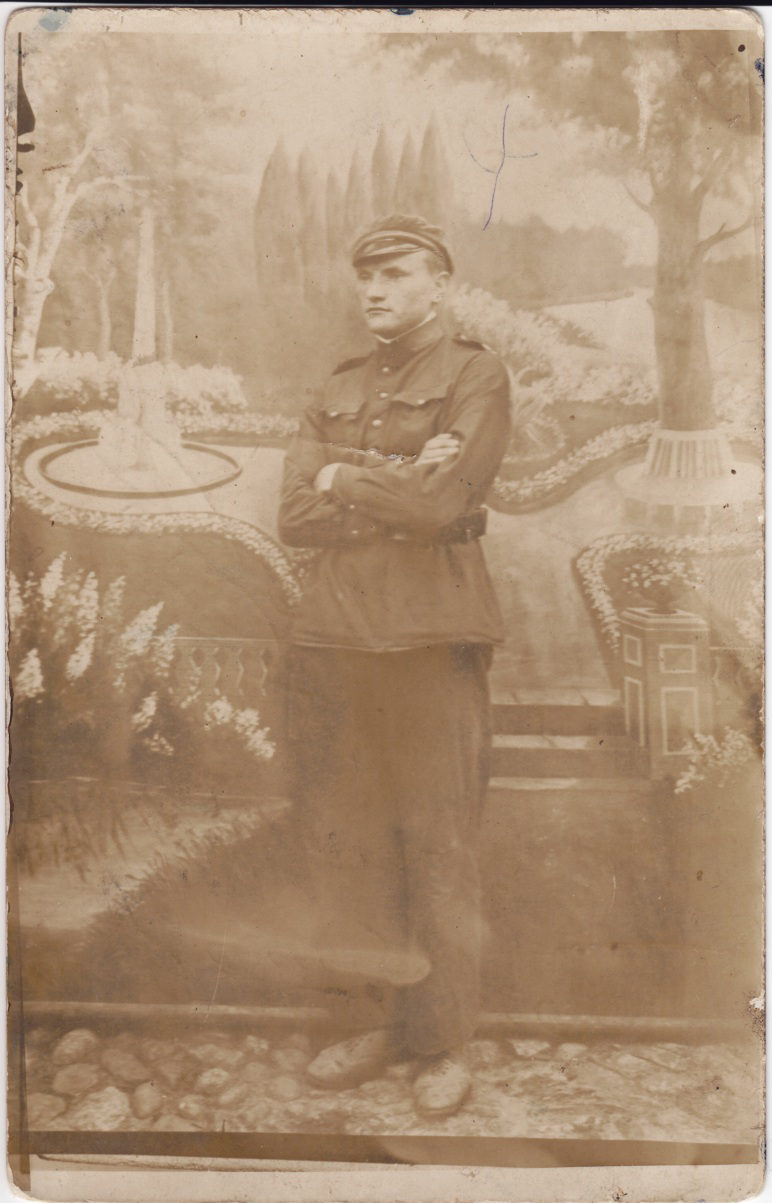
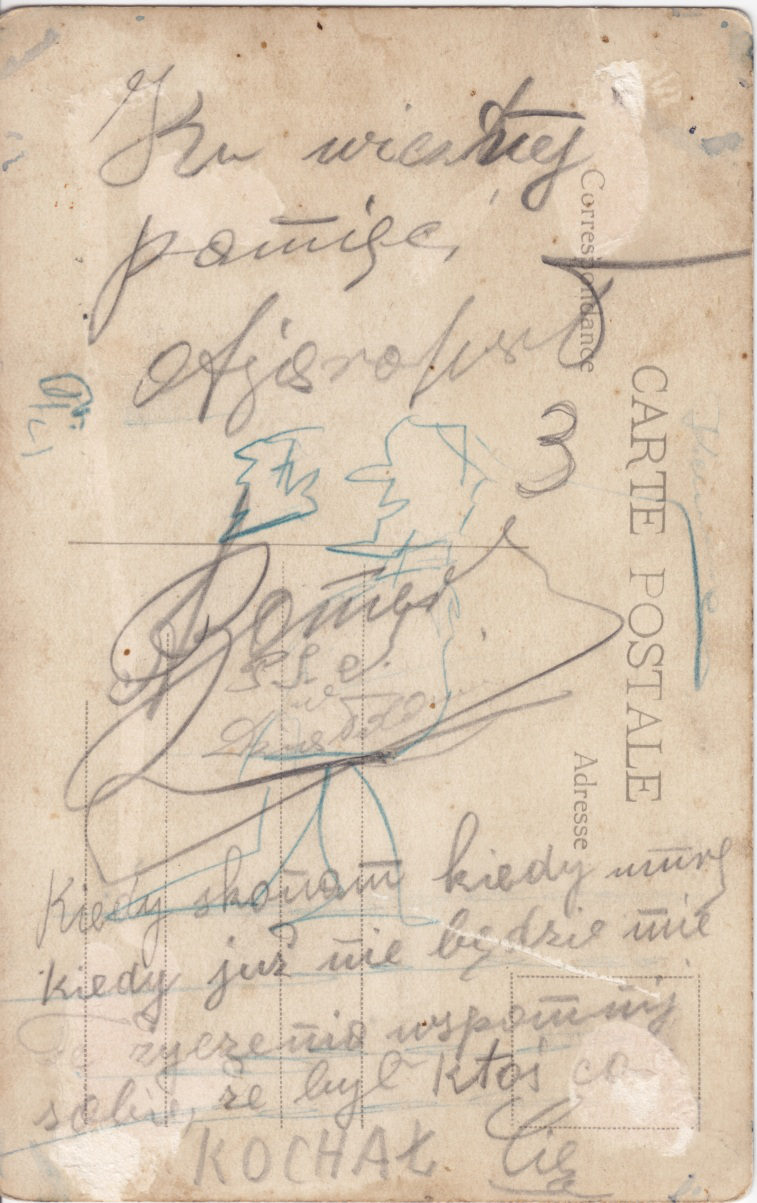
The author
Born on 26 October 1933 in Warschau (Warszawa)
„Aus dieser großen Liebe, die bis zum Lebensende beider andauerte, wurde ich, Bohdan, am 26.10.1933 in Warschau im Krankenhaus zum Kinde Jesu geboren.“ (Out of this great love, which lasted until the end of both their lives, I, Bohdan, was born on 26.10.1933 in Warschau in the Hospital of the Infant Jesus.) So the author opens the passage in which he speaks of himself — and of his name.
In the post-war years, when the family stayed in the region in which it had also spent the war, his own name seemed German to him. He changed Bohdan into Bogdan and gives as his reason a reaction to a time in which Germans were not welcome: „Er möge mir dies verzeihen, ich war jung und eingeschüchtert.“ (May he forgive me this, I was young and intimidated.) To this day it has remained Bogdan.
The author stayed with his parents three years in Warschau (Warszawa), until 1936. The title of this website follows the name he chose for himself. The birth certificate that he attaches as enclosure 4 does not help in distinguishing them: it is a later copy from the registry office and already bears the name Bogdan. The name of his birth, Bohdan, is named by his manuscript alone.
- Born
- 26.10.1933, Warschau (Warszawa), Hospital of the Infant Jesus
- Name at birth
- Bohdan Bomert
- Later name
- Bogdan Bomert, from the post-war years
- Warschau (Warszawa)
- three years, until 1936
- Birth certificate
- enclosure 4 of the manuscript, page 53
Image no. 6 and 7
Bohdan goes for a walk
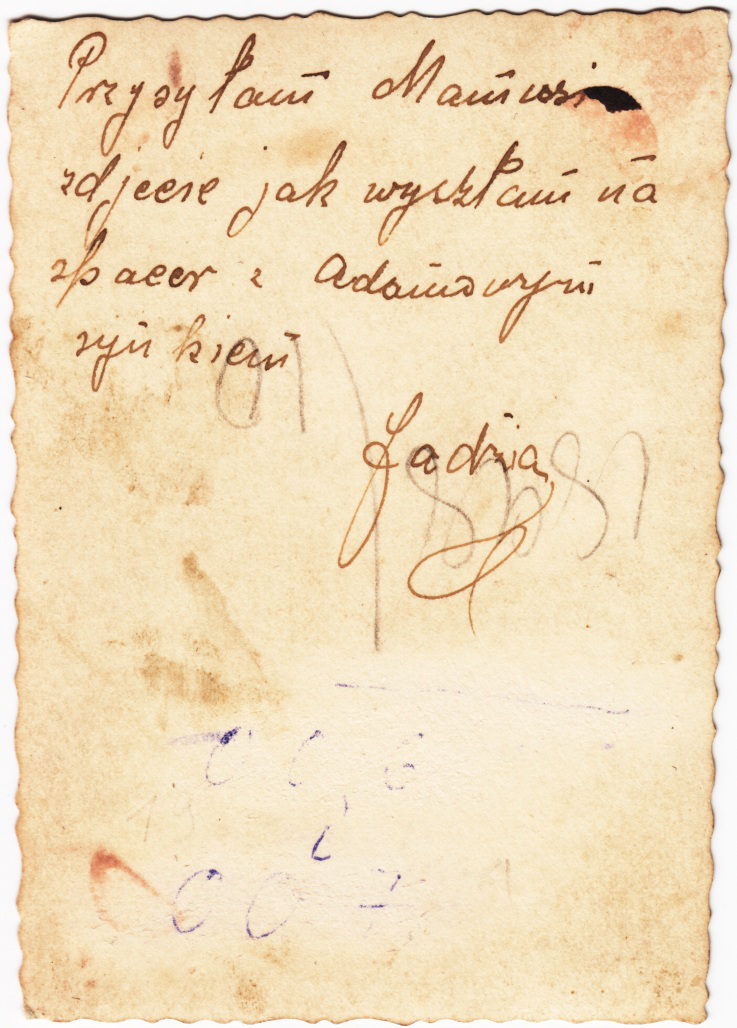
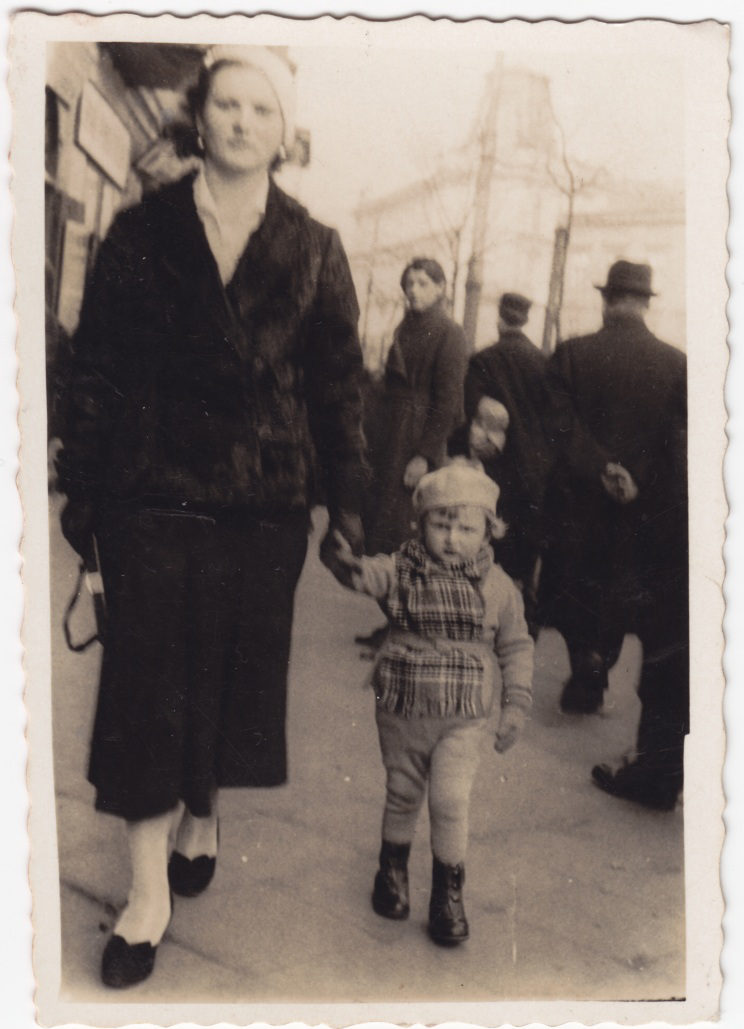
1936 to 1939
The move to Działdowo — and the parents' marriage
The mother's grandmother still lived in Działdowo with her husband Fijałkowski and the numerous siblings. For the parents' marriage the place was a problem: the father's mother was Protestant, the mother Catholic.
Grandmother Josephine was against the union — „der Hauptgrund dafür war die Tatsache, dass sie evangelisch und unsere Mama katholisch gewesen war“ (the main reason for it was the fact that she was Protestant and our Mama was Catholic), writes the author. Only when the second child was born did she give way, and the marriage took place on 10 April 1937 in Siemiątkowo Koziebrodzkie.
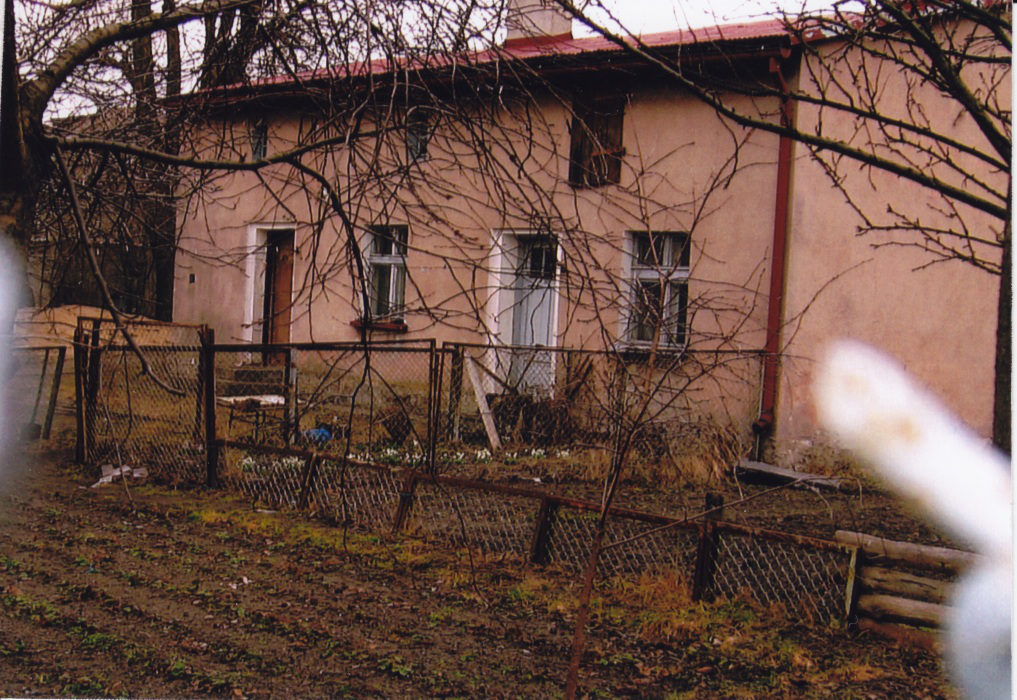
At that time the family lived in Pocztowa-Straße no. 4, on the ground floor of a two-storey house. The father earned his living by bookbinding. The front door stood directly on the pavement and led straight into the living room; to the left one came into the kitchen, straight on into the bedroom.
The author was at that time „schon über drei Jahre alt, also ein großer Junge“ (already more than three years old, so a big boy) and often visited his mother's parents, to whose house one went across the market square and downhill — „vorbei an einer Burgruine des Deutschen Ritterordens“ (past a castle ruin of the Teutonic Order), as he writes. There was a large fruit and vegetable garden there.
- 9 April 1912Adam Aleksander Bohmert is born in Wola Brwileńska near Płock.
- 14 October 1909Władysława Szczepkowska is born in Zeńbok near Ciechanów.
- around 1912Sabina Szczepkowska marries Stanisław Fijałkowski and moves to Działdowo. Adam rents a room there with the family.The first meeting of the future parents.
- 26 October 1933Bohdan is born in Warschau (Warszawa).
- 1936The family moves to Działdowo, Pocztowa-Straße no. 4.
- 29 January 1937Halina is born in Łaszewo, during an excursion by the parents.The author remembers the way through the dunes from Raciąż to Łaszewo.
- 10 April 1937Marriage of the parents in Siemiątkowo Koziebrodzkie.
Image no. 8 and 9
The family of three in Gdingen
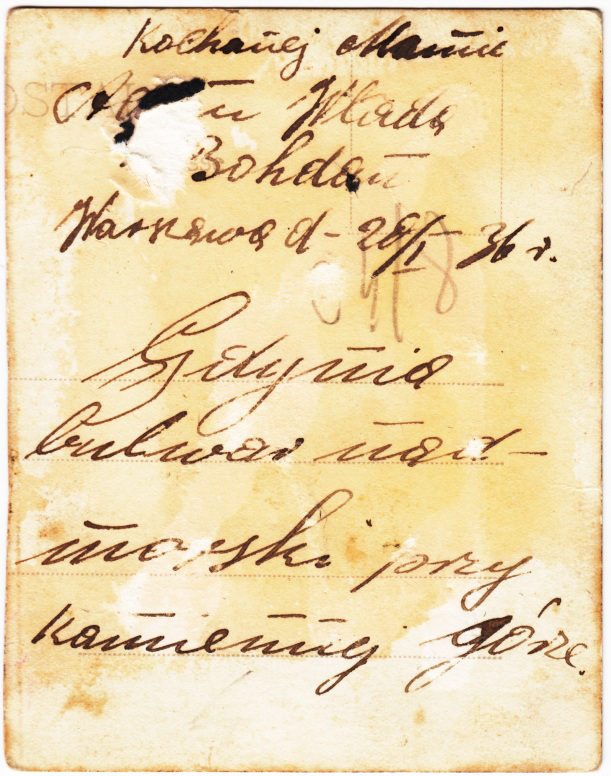
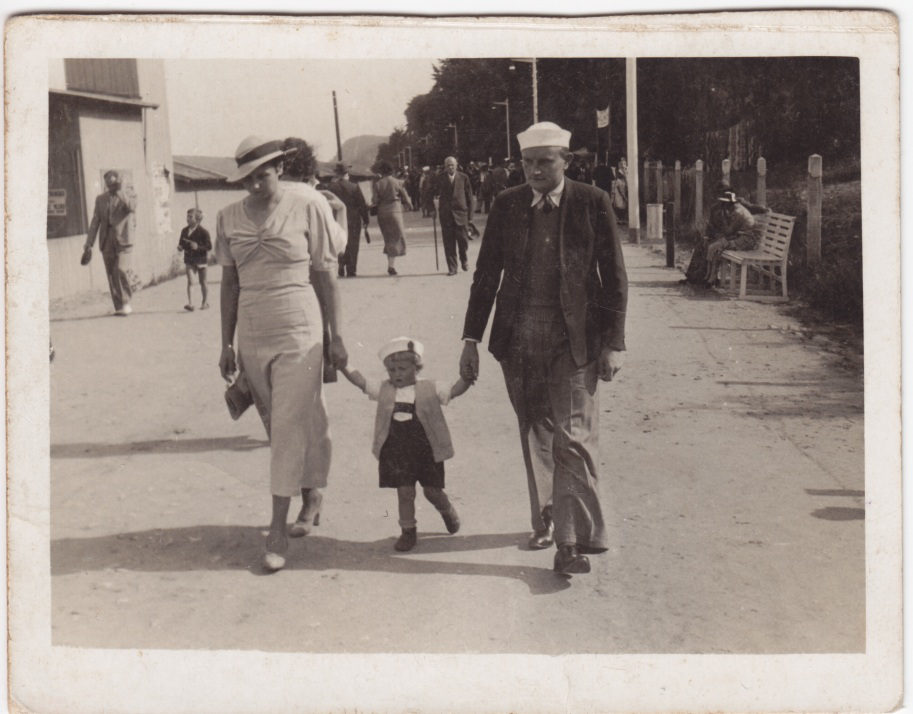
Gdingen (Gdynia) was in the nineteen-thirties the young harbour of the Second Polish Republic and a popular destination. The family then numbered three; Halina was born only in 1937, so the photograph was taken before that.
From memory
The catapult from the pavement
From the Działdowo years one scene has stayed with the author, which he tells like this: behind the house lay a large garden in which he gathered grass for the rabbits — „was ich nicht gerne tat, aber Papa hat’s befohlen, also musste ich“ (which I did not like doing, but Papa ordered it, so I had to). Because the front door was set into the wall on the pavement, he could shoot from there at the other side of the street. One day he hit a passing man on the head with the catapult. „Das endete mit einer Tracht Prügel vom Papa.“ (That ended with a beating from Papa.)
Such sentences are the reason why this volume is a book at all and not a pedigree. The author describes not what he can prove but what he has kept — and marks every point at which he is unsure.