Manuscript from Baunatal · July 2012
Chronicle of Bogdan Bomert
The history of the family of Adam and Władysława Bomert, written down by their son: a childhood in Działdowo, a war in Gralewo, two years without parents and a new life in Danzig (Gdańsk).
- Author
- Bogdan Bomert, born on 26 October 1933 in Warschau (Warszawa) as Bohdan Bomert, died on 22 February 2020 in Baunatal
- Written
- Baunatal, July 2012 — written for his own family and for its descendants
- Scope
- 70 pages, four chapters, 34 image numbers and 13 enclosures
- Places
- Warschau (Warszawa), Działdowo, Łaszewo, Ćwiklinek, Gralewo, Zaborowo, Raciąż, Danzig (Gdańsk)
- Period
- 1909 to 2020 — from the birth of the mother to the death of the author in Baunatal
Structure · in the order of the manuscript
Four chapters, one leaf before them — and an addendum
The author does not tell the story by family trees but by time: first the parents, then the war, then the return. The image numbers and the enclosures of the manuscript stand on this website where he placed them. Two pages that do not come from the source close the narrative: the descendants, which gather what the manuscript records about the three families since 1959, and the memorial page for the author himself.
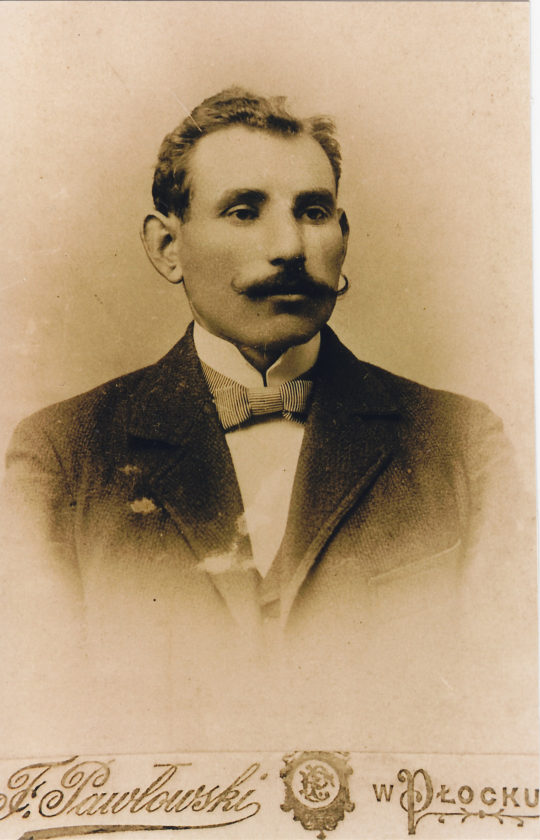
Jan Bomert, Adam's father
The first leaf of the manuscript carries only a name and an image: the grandfather, who died in 1918 while his wife was expecting the seventh child.
The time before 1933
Adam Aleksander Bomert, born in Wola Brwileńska near Płock, courts Władysława Szczepkowska with a forged telegram. In 1933 their son is born in Warschau (Warszawa).
The years 1939–1945
A grocery in Ćwiklinek becomes one in Gralewo. On 11 August 1943 ten Poles are hanged in the village; in April 1944 the Gestapo takes the parents away.
The end of the Second World War
On 17 January 1945 the Russians arrive. In July the mother returns from Ravensbrück, in the autumn the family moves to Zaborowo — five years between poverty and school bench.
Life in Danzig
Shipyard hall, labour battalion, technical drawing. On 27 May 1956 Teresa Chrobak asks for the white tango — two families become three.
The descendants and the three families since 1959
The marriages of Halina, Bogdan and Gizela with their certificates, the four children whom the manuscript names — and the place where it leaves its continuation open.
In memoriam Bogdan Bomert
The author himself: his life from Warschau (Warszawa) to Baunatal, the fifteen image numbers in which he can be seen, and his last lines.
From the addendum to the volume
The three families since 1959
Three marriages on three dates: Halina Bomert and the sailor Stanisław Kowalski marry on 8 February 1958, the author and Teresa Chrobak on 30 May 1959, Gizela Bomert and Adolf Gruszyc on 16 April 1966. The manuscript follows the three households into July 2012 and names four children in the process.
The Kowalski family
Halina Bomert, born in 1937 in Łaszewo, and the sailor Stanisław Kowalski. The manuscript names three sons: Krzysiek, Andrzej and Marek. Halina dies on 20 March 2010.
The Bomert family
Bogdan Bomert, technical draughtsman in the Danzig (Gdańsk) shipyard (Stocznia Gdańska), and Teresa Chrobak — they met on 27 May 1956, when the white tango was played. Church wedding on 4 July 1959. Of his sons the manuscript names only Paul. He dies on 22 February 2020 in Baunatal.
The Gruszyc family
Gizela Bomert, born a twin in 1940 in Ćwiklinek, and Adolf Waldemar Gruszyc, whom she met at the Danziger Fernseher Werke. The couple moves into the “Junge Viertel” (young quarter) in Wrzeszcz. The manuscript names no children in this marriage.
The manuscript in figures
The text, from the title page to the leaf of enclosure 13. This website reproduces it in full.
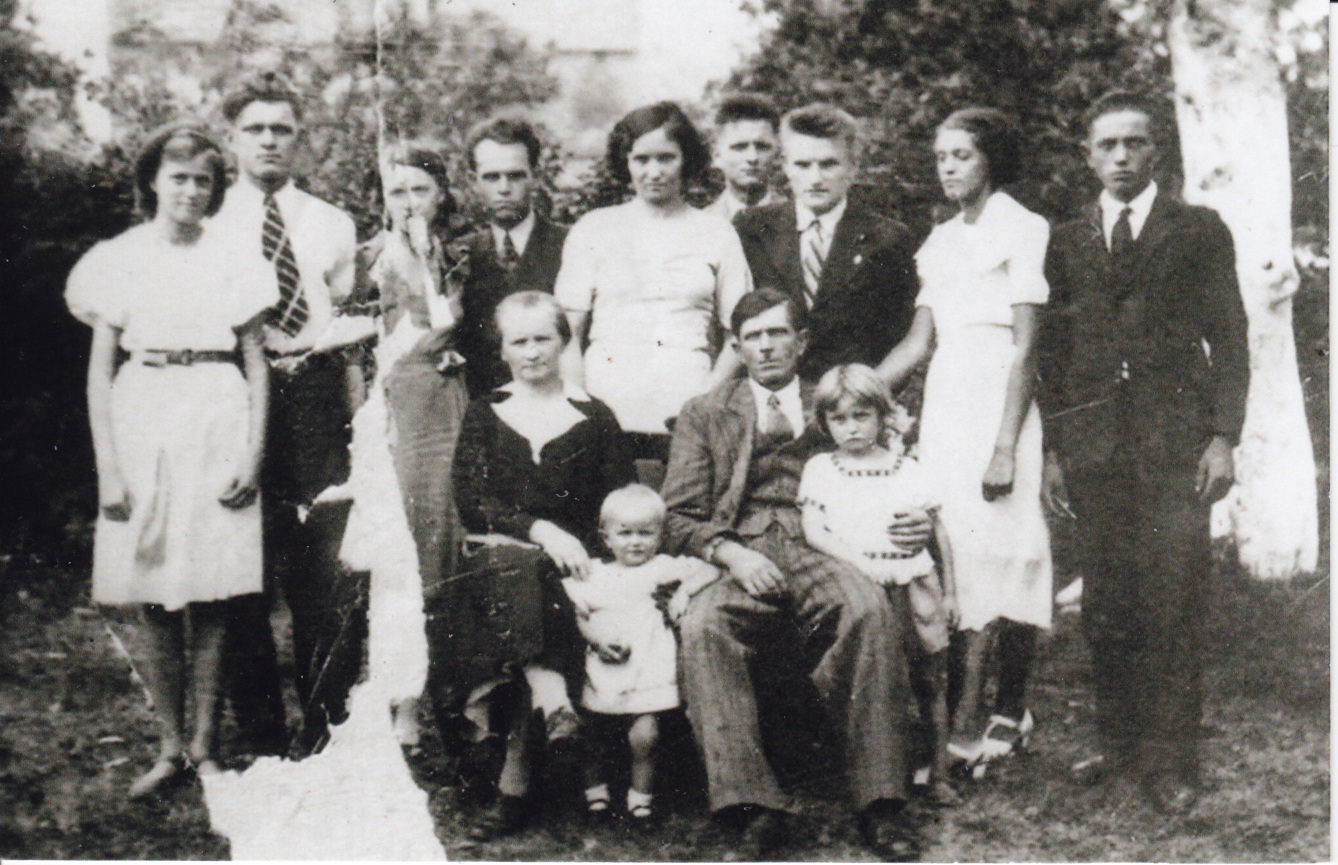
Photographs from the family's possession, with the author's captions. Several numbers carry two images, from 12a to 27a.
Copies of birth and marriage certificates, a report on the work in the underground, a map and twelve leaves of recollections.
Where the figures come from. Page numbers, image numbers and the list of enclosures come from the manuscript itself. The website counts the image numbers as the author assigned them — including the intermediate numbers 12a, 12b, 19a, 19b, 21a, 22a, 24a and 27a.
Sollte ich in meiner Erzählung jemand oder etwas vergessen oder etwas anders dargestellt haben, als dies in Wirklichkeit passiert ist, dann bitte ich alle um Vergebung. Das menschliche Gedächtnis — und meins allen voran — ist manchmal nicht sehr zuverlässig, und das benutze ich als meine Entschuldigung.
Should I have forgotten anyone or anything in my narrative, or have described something differently from the way it actually happened, then I ask forgiveness of you all. Human memory — and mine above all — is sometimes not very reliable, and that I use as my excuse.
How the parents found each other
A room at the Fijałkowskis, a telegram with a forged signature, one refusal after another. The author notes: „Wie er es schließlich geschafft hat, ihr Herz zu gewinnen, ist mir bis heute ein Rätsel.“
How he finally managed to win her heart is a riddle to me to this day.
What the war made of the family
The father a member of the Armia Krajowa, betrayed, tortured in Nowy Dwór (Nowy Dwór Mazowiecki), shot in the forest. The mother back from Ravensbrück — arrested two weeks after a serious operation, separated from her children for two years.
How it went on
Zaborowo without electricity, with a well and a small stove; a mother who trades in eggs and butter; a school-leaving examination in a former synagogue; a drawing office in the Danzig (Gdańsk) shipyard (Stocznia Gdańska).
About the source
What stands here — and what does not
The basis of this website is the PDF file Saga Bomertow in the version of July 2012, 70 pages with text, photographs and scans of certificates. The text has not been rewritten and not abridged; the chapters follow its headings, the image captions are his own, each supplemented with the manuscript page.
What has been added are only the things a book does not need and a website cannot do without: a structure that leads through the chapters, a chronology, a register of the people and places and an image index showing which illustration comes from which manuscript page.
Enclosure 13 of the manuscript is a sound recording: at the age of 74 the author made a recording of the “Ave Maria”; it was to sound at his golden wedding. In the PDF only the leaf on which he explains it stands — the recording itself is not part of the file. On this website the enclosure is therefore carried as what it is in the source: an explanation, not a piece of music.
Whoever knows the occasion also knows the limit of this edition: the author writes that the further fortunes of the three families are “schon drei andere Geschichten” — and that someone will hopefully take on that task. What the source nevertheless records about the three families and their children stands on the page The descendants.
already three other stories.
Appendix
Certificates, recollections and register
What the narrative documents stands gathered at its end: thirteen enclosures, whose list the author himself drew up — with page numbers for every item.
Appendix I
Certificates and documents
Eleven items: the birth certificates of Adam, Władysława, Bogdan, Halina and Gizela, four marriage certificates, the report on the AK service of Adam Bomert and the map of the villages.
Appendix II
Gizela's recollections
Twelve leaves that the author placed at the end: the records of his sister, from which he quotes twice in the second chapter. With them the leaf on the “Ave Maria” recording.
Register
Chronology, names and images
All dates from 1909 to 2020 in one sequence, the people and places of the volume for reference, and the index showing which image number stands on which manuscript page.
At the close of the manuscript
The author does not end with the death of his mother in March 1969, but with a plea and a word of thanks. Between the last recollection and the closing word stands the sentence that best captures this volume's relation to its own history: „Ich danke Gott bis heute für die Rückkehr unserer Mutter. Wäre sie nicht wiedergekommen, dann hätten wir nichts zu lachen gehabt.“
I thank God to this day for the return of our mother. Had she not come back, we would have had nothing to laugh about.
This website puts the volume online without altering it. Whoever begins a chapter should know that the first page is devoted to the grandfather — a name, an image and a date of death, nothing else.