Prefaces and Introduction
Against forgetting, for understanding
The chronicle of the Bomert family spans ten generations. This second volume follows the thread of the male line from the emigration to Poland in 1716/17 to the births of the year 1863 — and works through the legacy of a first family history that was written in exile.
- Author
- Jürgen Bomert
- Source
- The first comprehensive chronicle of the family by Heinrich (Henryk) Bomert, 1909–1981, written “in exile” in English, German and Polish
- Scope
- Ten generations in all; this volume deals with the first to the fourth, 1717 to 1863
- Further volumes
- Volume 1, “The Prehistory, with the Family’s Origins”, exists in outline and is in preparation. Volume 3 is to deal with the generations that Heinrich himself still knew.
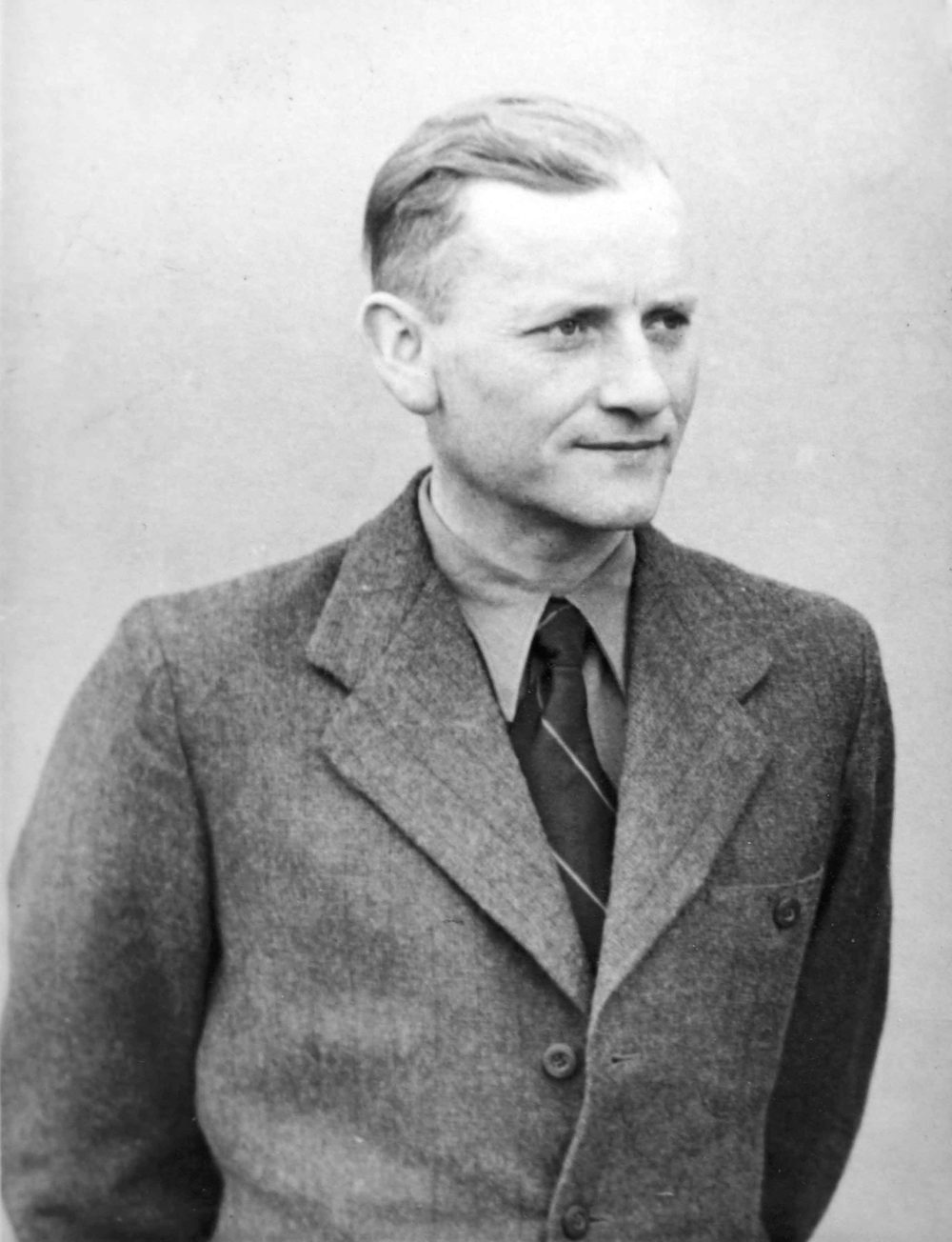
Preface I
Whoever follows only the thread of the male line loses half of heaven
„Betrachte beizeiten unvoreingenommen und mit offenen Augen den Lauf Deines Lebens“, begins the author, „und werde dir bewusst, wie viele Flüsse darin münden, die dich formen und nähren, fördern oder auch hemmen, und erfahre und ergründe einen Teil Deiner selbst. Allein aber bist Du ein Nichts.“
“Consider in good time, without prejudice and with open eyes, the course of your life,” begins the author, “and become aware of how many rivers flow into it, that shape and nourish you, further you or also hold you back, and come to know and fathom a part of yourself. But on your own you are a nothing.”
A chronicle, it is said further, can create awareness of one’s own past and of the family’s past and cast a light on things to come. It links the dead and the living, wakes the dead as it were virtually, honours their effort, their work and their care for the children — and thereby grants them an “eternal life”.
That here only the Bomert family tree, that is the male line, is followed, the author defends not as completeness but as a choice: the unique significance of the female lines becomes visible at the decisive points, “for half of heaven belongs to them”. A complete list of ancestors is impossible on arithmetic grounds alone — ten generations would yield 512 ancestors in the tenth generation alone.
The limitation is therefore not only a loss but also a gain: in a world earlier dominated more strongly by men, the development of the family can be traced in exemplary fashion. „Der soziale Status des Vaters präformierte statistisch gesehen den Status seiner Nachkommen.“
Statistically speaking, the social status of the father preformed the status of his descendants.
„Was Du nicht aufschreibst, ist nie geschehen.“ Maxim of the preface
“What you do not write down has never happened.”
The background of this work. Two great caesuras have, in the author’s estimation, destroyed the transmission: the Thirty Years’ War and the Second World War. Alongside them stands misfortune in small things — burnt parish registers, flooding, archival material abandoned without need. And at the micro-level of the family: stories that were told and carried on and were then lost with the death of the teller.
Preface II
Thanks to the many helpers
„Eine Chronik ist nie die Arbeit eines Einzelnen allein.“ The author names his brothers Egon and Peter, along with Bogdan and Otto Schienke — and a family researcher whose own story is remarkable.
“A chronicle is never the work of one person alone.”
Contributors
Family and circle
Egon and Peter, the author’s brothers; Bogdan and Otto Schienke. To them goes the thanks for contributions, memories and material — among it the first version of Heinrich’s chronicle, which he dedicated in 1973 from Australia to his nephew Egon.
Research
Dana Pufahl
A “very committed family researcher” who, in the author’s words, “played a decisive part in many a breakthrough with selfless help”. She later established that her own widely ramified ancestors show family connections with this family in the 19th century.
„Letztendlich, so sagt uns dies, ist die Welt eine große Familie.“ Where in the text various dates for a marriage or for a date of death stand side by side, they often come from this double investigation.
“In the end, so this tells us, the world is one big family.”
Preface III
Sheet by sheet from an uncle who wrote in exile
“Sheet by sheet” the author has worked through the first chronicle of his uncle Heinrich Bomert — in handwriting mostly in a “grammar of his own, archaic East German”. From this arose the plan to give the records an archival, scholarly foundation and to supplement them where it became necessary.
They had come into being under the most difficult conditions: in exile, in English, German and Polish, with practically no good possibility of consulting old records, and without suitable map material. In the sixties and seventies after the Second World War Heinrich composed two versions with slight differences in content — one for his daughter Elizabeth, one for the relatives.
What he lacked in the process, he describes himself: „Bis 1948 hatte ich eine grosse Landkarte von Polen (1 mal 1,5 m), eine zweite von Deutschland, dort hatte ich jeden Ort, der mich betraf, schön bezeichnet. Leider wurden sie mir gestohlen — weil es tatsächliche Seltenheiten waren, jedes Dorf, sogar einzelne Häuser.“
Until 1948 I had a large map of Poland (1 by 1,5 m), a second one of Germany, on it I had nicely marked every place that concerned me. Unfortunately they were stolen from me — because they were real rarities, every village, even individual houses.
Heinrich died at the end of the seventies from the consequences of his diabetes mellitus, among other things with amputations of limbs, “but not tired of writing and painting”. Besides the chronicle he left behind numerous photographs. „Ohne seine Auswanderung wäre die Geschichte vielleicht nie, sicherlich nicht so, geschrieben worden.“
Without his emigration the story would perhaps never have been written, certainly not in that way.
The author expressly records that as a small child he was still held in Heinrich’s arms and later never met him again: „Es ist mir daher ein Anliegen, ihn für seine für die Familie so verdienstvolle Arbeit zu ehren.“
It is therefore a matter of importance to me to honour him for his work, so meritorious for the family.
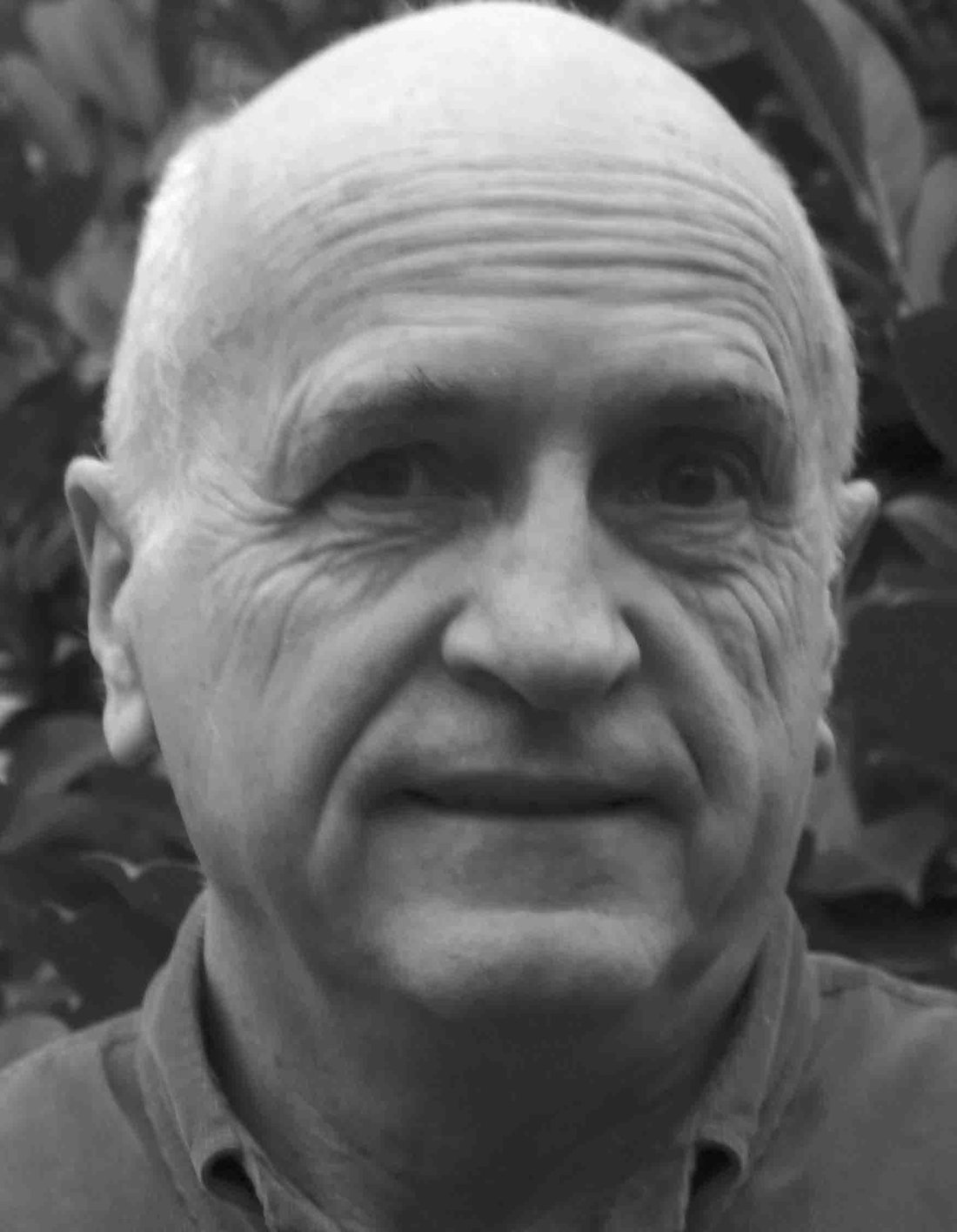
The first legend
A physician from near Paris who marched as far as Moscow
Heinrich Bomert began his chronicle with a legend of origin: a young physician named Julian de Bonmert, coming from near Paris, is said to have marched to Moscow with Napoleon’s army in 1812 and, wounded on the hurried retreat, to have been nursed in Poland and to have stayed there. The author writes that this account “has quite a historical core” — the family’s history of origin is, by present knowledge, refuted.
What remains, he describes himself with great affection for the tale: „Dieser abenteuerlichen, in Frankreich startenden Erzählung folgend, erhielt Heinrichs Enkelin den wohlklingenden französischen Vornamen ‚Ciel‘, ‚der Himmel‘ und damit ‚die Himmlische‘.“
Following this adventurous tale, which starts in France, Heinrich’s granddaughter received the melodious French forename “Ciel”, “heaven”, and with it “the heavenly one”.
And he concedes what the legend achieved: it had “the great advantage of awakening a great deal of interest and firing the imagination and thereby producing a spirit of research”. Whether the new legend of origin told in the first volume can produce the same tension, he asks himself — and leaves the answer open.
On testing the legend. What was searched for in France and in the Polish parishes, and what came of it, is set out in the chapter on the fourth generation: The French officer who did not exist.
„Wir formen die Leben der Vorfahren zu Bildern nach unseren Vorstellungen.“ The author on the handling of biographies
“We shape the lives of the ancestors into images after our own notions.”
The writer’s self-control. „Biographien über nicht mehr Lebende sind insofern ‚leichter‘ zu verfassen, da diese sich nicht mehr wehren können. Wir dürfen uns von ihnen physisch befreit ein Bild machen, wie es uns gefällt. Ohrfeigen können sie nicht mehr verteilen. Damit sagt das Bild am Ende vielleicht mehr über den Schreiber aus als über sie.“
Biographies of people no longer living are in that respect “easier” to compose, since they can no longer defend themselves. Physically released from them, we may form an image of them as we please. Slaps they can no longer hand out. Thus the image at the end perhaps says more about the writer than about them.
From the preface
The Writer’s Cage
Du bist nur vergangener Wanderer Erkunder.
Du siehst auf Papier entstehen und vergehen.
Kennst nicht ihre Wahrheiten, siehst nicht ihre Wunder,
Nicht die Mühsal, nicht die Qual,
nicht ihr stilles Sinnen,
lautes Lachen und ihre Verehrer`Innen.
Du magst forschend rück- und sternenwärts jagen,
und fühlst doch nie ihr Herz – nur Dein eigenes fragendes: noch schlagen.
Jürgen Bomert
You are only an explorer of past wanderers.
You see it come into being and pass away upon the paper.
You do not know their truths, you do not see their wonders,
not the drudgery, not the torment,
not their silent brooding,
loud laughter and their admirers, women and men.
You may hunt in research backwards and towards the stars,
and yet you never feel their heart – only your own questioning one: still beating.
The author placed this poem at the point where he speaks of biographies of people no longer living being “easier” to compose. It is therefore not an ornament but a self-examination — and for the reader the clearest passage in the volume about how far a family history can reach and where it ends.
Introduction to the new chronicle
How this volume is built up
„Der Schleier über die unbekannte oder graue Vergangenheit unserer Vorfahren lichtet sich allmählich Stück für Stück“, writes the author — and adds what accompanies every family research: „Jede neue Antwort wirft auch neue Fragen auf.“
“The veil over the unknown or grey past of our ancestors lifts gradually, piece by piece,” writes the author — and adds what accompanies every family research: “Every new answer also raises new questions.”
The chapters follow the generations
From the first generation, the immigrant Friedrich (I.), to the fourth, Peter (III.) Bommert and his niece Anna Maria. Some of the records are incorporated in the text as original extracts, the rest stand with notes in the appendix.
The appendix has two parts
A family part — records, notes and the “bare” line of descent — and a general part, which describes the conditions under which the family lived: village economy, estates, the origin of the settlers, the history of Poland.
Three works return again and again
Maercker’s “Geschichte des Kreises Schwetz”, the Prussian contribution cadastres of 1772/73 and the Polish “Słownik Geograficzny Królestwa Polskiego” of the 1880s.
The cadastres as a source. They were drawn up after the annexation of West Prussia for the assessment of taxes and rest precisely on the older conditions — which is why they are reproduced in extract in Appendix 2 for the villages of the first places of residence. For an Instmann (farm labourer bound to the estate) like Gottfried Friedrich (III.), the entry without a cow and without a pig is the most precise evidence that the transmission knows.
The third volume. Heinrich’s chronicle is indispensable for this second volume — but even more so for the planned third, which deals with the generations that Heinrich himself still knew. There further contemporary witnesses are to join as chroniclers.
To close the introduction
A wide arc — and a limit of this edition
The author concludes his introduction with a geopolitical arc that reaches from the early Middle Ages into the present: from the expansion of the western emperors and of the Teutonic Order through the Battle of Tannenberg in 1410, the partitions of Poland and the failed attempts at conquest in the East to the conflicts of the present. In this section he expressly takes a political stand.
Why this section is not reproduced verbatim here. It does not belong to the family history, and its day-to-day political parts are controversial. This edition does not adopt it, but points to it: it stands in the manuscript at the end of the introduction and can be read there in full.
An outlook
„Wer wird sie weiter führen?“
“Who will carry it on?”
„Schließlich stellt eine Niederschrift von Familiengeschichte nur ein offenes Programm dar, die jeder mit Leben, mit Zutun und Abtun verändern und ergänzen kann.“ With this question the preface ends — and it is the real commission of the volume. The chapters that follow are the attempt at an answer.
In the end, a record of family history is only an open programme, which anyone can change and add to with life, with contribution and omission.